
KNOWLEDGE CENTER
Practical Insights.
Smarter Solar Decisions.
Expert articles, engineering guides and technical resources covering solar street lighting, solar air conditioning, energy storage systems and project planning.
Trending Searches
Battery Capacity
Pole Height
Lux Calculation
All-in-One vs Split
FEATURED GUIDE
Start with the Most Comprehensive Guide
Learn how to select, size and implement solar street lighting systems for roads, communities and commercial projects.
5 min read
Updated Jul 2026
The Complete Guide to Planning Solar Street Lighting Projects
Everything you need to know about design, sizing, components, installation and long-term performance.
BROWSE BY TOPIC
Explore Knowledge by Topic
Browse our key knowledge areas to find guides, how-tos,
and insights tailored to your needs.
01
Solar Street Light Guides
Design, calculation and
performance guidance
for solar street lighting
projects.
02
Solar Air Conditioner Guides
Technical guides, system design and ROI insights for solar air conditioner solutions.
03
Battery & Energy Storage
Battery selection, runtime calculation and system design for reliable energy storage.
04
Project Design & Planning
Step-by-step guides for project design, BOQ preparation and system planning.
05
Manufacturing & Quality
Learn about manufacturing, quality control and international testing standards.
New articles added weekly
Trusted by solar professionals worldwide
LATEST ARTICLES
Answers to Real Project Questions
Practical how-to guides and expert insights to help you plan,
design and implement successful solar projects.
All Topics
Solar Street Lighting
Solar Air Conditioning
Energy Storage Systems
Project Planning
Product Quality
★ FEATURED
SOLAR STREET LIGHTING
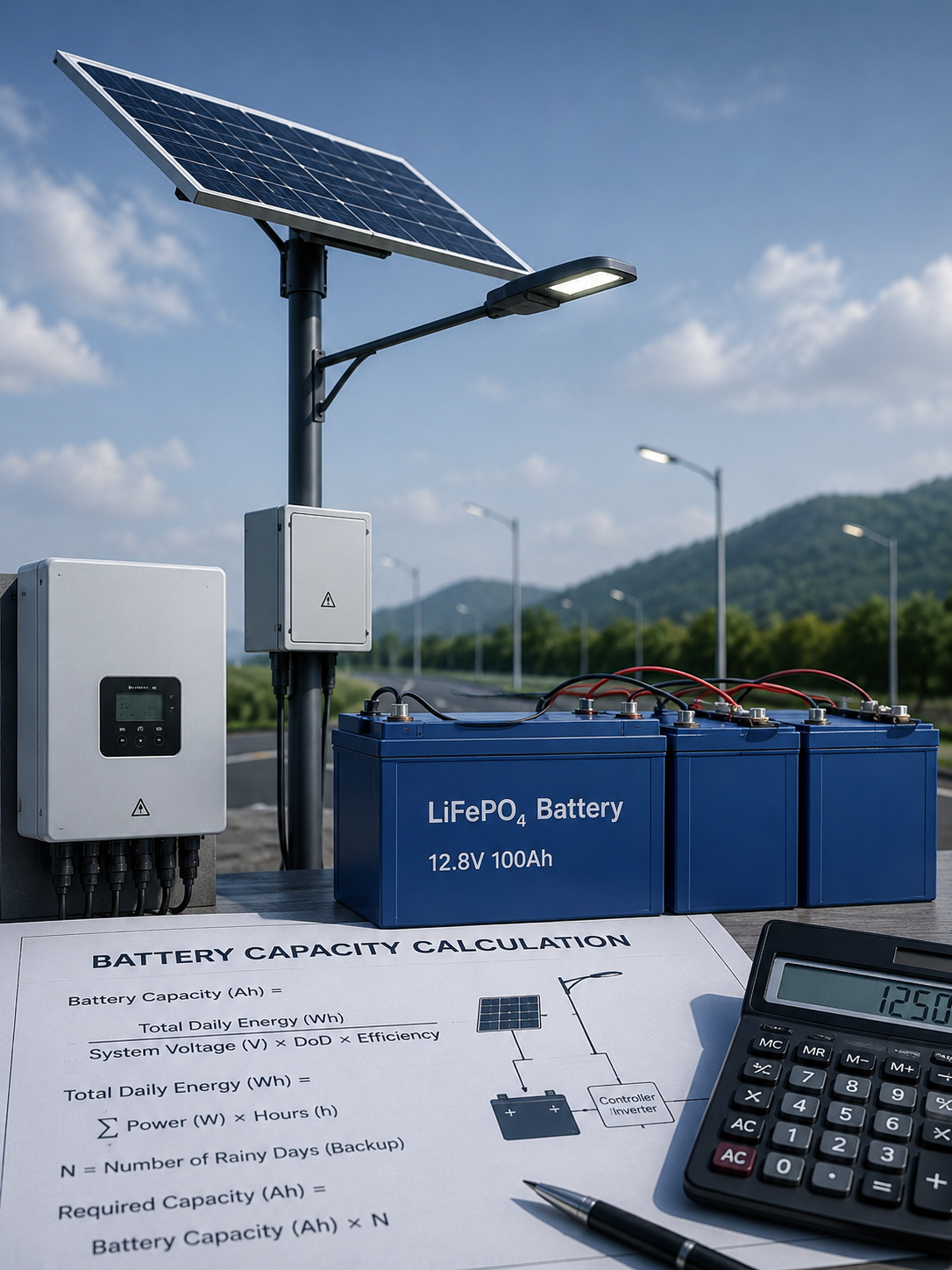
How to Calculate Battery Capacity for Solar Street Lights
A practical step-by-step method for sizing LiFePO₄ batteries based on lamp power, working hours, system voltage and rainy-day backup.
5 min read
• Updated Jul 2026
SOLAR STREET LIGHTING
How High Should a Solar Street Light Pole Be?
Recommended pole heights for different road widths, applications and lighting performance requirements.
6 min read
• Updated Jul 2026
SOLAR AIR CONDITIONING
Which Solar Air Conditioner Fits Your Project?
Compare on-grid, hybrid and off-grid solar air conditioners to choose the most suitable solution for residential and commercial projects.
6 min read
• Updated Jul 2026
SOLAR STREET LIGHTING
How to Design Solar Street Lights for Long Rainy Seasons?
Learn how to size solar panels, battery capacity and backup days to maintain reliable lighting during extended rainy seasons.
5 min read
• Updated Jul 2026
SOLAR STREET LIGHTING
How to Evaluate a Solar Street Light Sample Before Ordering?
Learn how to verify battery capacity, LED output, solar panel performance and build quality before placing a bulk order.
6 min read
• Updated Jul 2026
ENERGY STORAGE SYSTEMS
How Long Can an Energy Storage System Power Your Load?
Estimate backup time based on battery capacity, inverter power and appliance load for residential and commercial energy storage systems.
6 min read
• Updated Jul 2026
FAQ
Frequently Asked Questions
Practical answers to help you choose, design and implement reliable solar energy projects.
Quick Answers. Smarter Decisions.
Find clear, practical answers to help you plan and implement your solar projects with confidence.
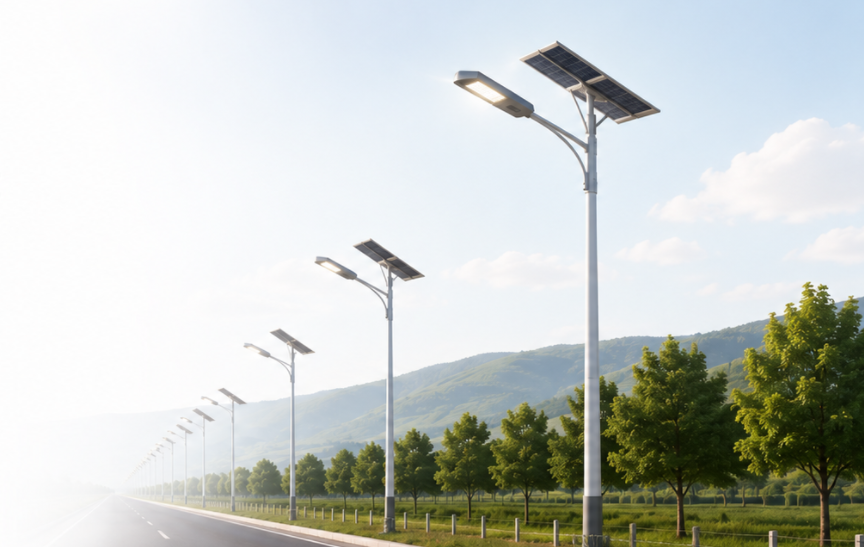
Representative project reference for engineering consultation.
✓ 30+ Projects Supported
✓ 10+ Countries Served
✓ Engineering Consultation
✓ Technical Documentation
How many hours should a solar street light operate each night?
Most municipal and commercial projects are designed for 10–12 hours of nightly operation.
The final lighting schedule depends on:
• Local regulations
• Battery capacity
• Solar irradiation
• Backup-day requirements.
How many rainy days should the battery be designed for?
There is no universal answer. The required battery backup depends on the project’s location, local climate and reliability requirements.
For most municipal and commercial solar street lighting projects, we typically recommend designing for 2–3 backup days. In regions with extended rainy seasons or critical infrastructure, 4–5 backup days may be more appropriate.
Our engineering team evaluates local solar irradiation, lighting schedule and battery capacity to recommend the most suitable system configuration.
What pole height is suitable for an 8–10m wide road?
For roads with a width of 8–10 meters, an 8m pole is typically recommended for two-lane roads, while a 10m pole is more suitable for wider roads, intersections or projects requiring higher lighting uniformity.
The final pole height should be determined based on road width, pole spacing, mounting arrangement, required illuminance and local lighting standards.
Lighting simulations such as DIALux can also be provided to verify pole height, spacing and illuminance before project implementation.
Our engineering team can recommend the most suitable pole height and lighting layout according to your project requirements.
How do I compare battery capacity between different suppliers?
Battery capacity should not be compared by the Ah rating alone. A complete evaluation should consider battery voltage, total stored energy (Wh), battery chemistry, cell quality and the actual system configuration.
For example, two batteries with the same Ah rating may provide very different energy storage if their voltages are different.
When comparing quotations, always ask for the battery voltage, energy capacity (Wh), LiFePO₄ cell grade, expected cycle life and warranty, rather than relying only on the advertised Ah value.
Our engineering team can help review supplier specifications and ensure different proposals are compared on an equivalent basis.
What information is required before preparing a quotation?
To prepare an accurate quotation and system recommendation, we typically require basic project information such as the installation location, application scenario, road width or site dimensions, lighting requirements and the expected operating hours.
If available, drawings, project specifications or tender documents can help us recommend a more suitable configuration and avoid unnecessary costs.
Even if your project is still in the planning stage, our engineering team can provide preliminary recommendations based on the available information.
How can I evaluate a solar street light sample?
A quality sample should be evaluated as a complete lighting system rather than by appearance alone.
We recommend checking the LED performance, battery capacity, solar panel output, controller settings, material quality, waterproof protection and overall workmanship.
For engineering projects, it is also important to verify lighting performance through on-site testing or lighting simulations, ensuring the sample meets the project requirements before mass procurement.
Our engineering team can provide technical documentation and testing recommendations to support your evaluation process.
PROJECT-SPECIFIC ADVICE
Let's Discuss
Your Next Project
Share your project requirements, and our engineering team will recommend the right products, system configuration and project solution.
Free Project Consultation
No obligation
24-Hour Response
Fast & reliable
Engineering Support
Before quotation